March 3, 2026
Marketing
Comms
Time to Read:
5 minutes
Author:
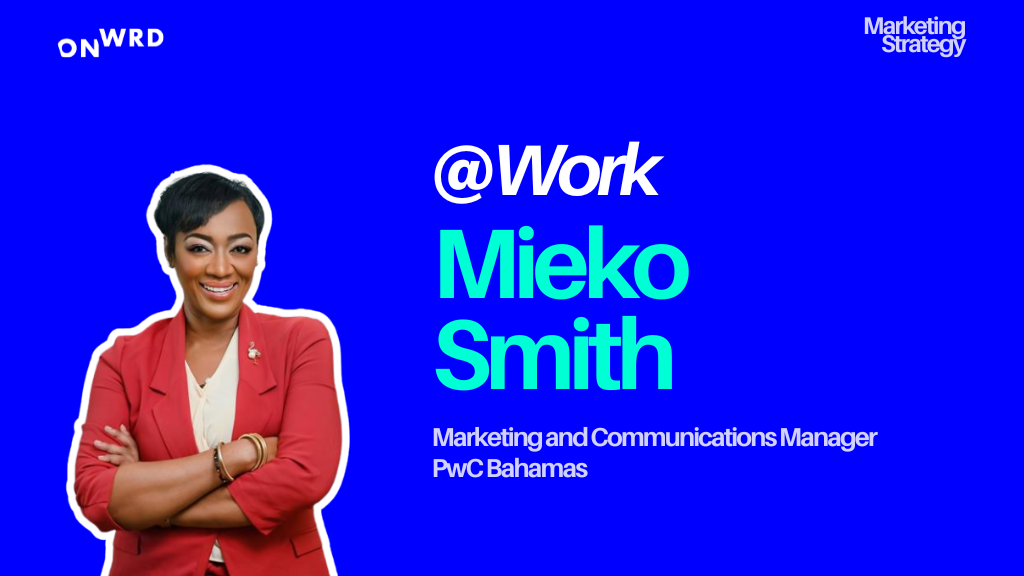
PwC Bahamas is part of a global professional services network that supports clients through audit, tax and advisory work in a fast changing environment. In this edition of @Work, we spoke with PwC Bahamas Marketing and Communications Manager Mieko Smith about how the firm is growing its digital footprint, humanising a global brand for the local market and keeping client needs at the centre of every decision. Their perspective highlights how relationships, data and a strong service culture shape marketing in the professional services space.
MS: The first challenge was growing our digital footprint, especially on LinkedIn. At one point the page felt stagnant. It was not enough to simply produce content and post it. I realised we needed to do more to create and curate conversations so we could foster real engagement.
That meant rethinking our entire approach to content curation. I started using more of the tools available on LinkedIn and across social media, bringing in more video and more storytelling. We focused on our people and our services, and we pulled from both global and local content to humanise the brand. The page was growing, but not at the level I wanted. We went from under one hundred followers when I started to over five thousand, but I have a bigger goal, so I had to ask myself what I could do better.
Now I pay close attention to the metrics and the data behind every post. I look at what resonates with our audiences and our clients, and I listen to the feedback. Sometimes it is as simple as someone stopping me in the food store to say, “I saw that on LinkedIn.” It is not just me, either. We use our team members, our executive visibility strategy and our partners to push content. They are also getting feedback at the gym or in the food store when someone says they like a post. We are sharing more of our corporate social responsibility, our wellness initiatives and the things that show we are a people culture. We go beyond audit to show that we are big on giving back and that staff wellbeing is a key part of how we work.
The second challenge was our recent brand refresh. We rolled that out within the last month. The last refresh was about fourteen years ago, so we are in a completely different era. Our clients expect us to keep up with the pace of change.
The refresh came with a new logo and brand identity. Internally, we had to help our people adapt, get familiar with the refresh and understand why it was needed. Externally, we had to adjust our messaging so clients could recognise that we are entering a new era that calls for change, momentum and growth. Both challenges required us to be very intentional about how we tell our story.
MS: Something we say often at PwC is that our brand is rooted in relationships. Our purpose is to build trust in society and solve important problems. When you think about trust, you also think about communication, because in any relationship those two things go together.
In The Bahamas, like much of the Caribbean, people like to do business with people they like. They have to like us, like what we are doing and what our brand stands for. We have the legacy, the people, the capabilities, the tools and the technology. We are keeping up with change and digital transformation. When clients come to us, they are looking for help with challenges and they want us to solve problems.
We approach each client with a tailored mindset. What you need may be different from what another company needs. So we look at each situation and ask what that client needs from us. That informs how we tailor our messaging, our approach and the strategy or advice we offer.
We also stay attuned to what is happening in the wider country. For example, corporate income tax and Pillar Two tax are major topics. There are concerns about how to get ready. We are talking with clients, listening to their concerns and then going back to our team, both locally and regionally, and even across the global network, to pull resources together and come up with solutions that fit our clients and the Bahamian landscape.
When we put out thought leadership, whether it is through LinkedIn, client conversations or events that create space for these discussions, it is all rooted in the relationships we are building and the trust behind the brand.
MS: Trust and forward thinking expertise are definitely central. As I said, PwC’s purpose is to build trust in society and solve important problems. Everything we do with clients is grounded in that.
Our clients come to us because they are looking for a trusted advisor. They want our expertise, but they also want to know that the firm has their best interests at heart, understands the nature of their business and the landscape, and is staying ahead of the trends.
We do not want to be reactive. We want to be proactive, so we are calling them, not waiting for them to call us after something has happened. We make sure they are keeping ahead of the game. We like to say we are helping to ensure that the momentum keeps going, so there are no surprises. And if there are surprises, we can help them navigate those. That requires collaboration, communication and trust in every relationship.
MS: For me, success starts with alignment. Every initiative, every event, every piece of thought leadership has to connect back to what the business is trying to achieve.
We use client feedback surveys to gauge how we are doing. We ask clients to tell us what we are doing well and where we can improve. We take that information and use it to rethink and strengthen the strategy. That is a yearly process.
We also look at data from our digital channels. On LinkedIn and other social media, we review monthly metrics to see what is resonating. We look at demographics, which audiences we are reaching and what topics they want more of. We segment those audiences and then tailor content to their needs.
I work with a regional team to review the digital metrics each month. We look at website hits, event performance and the leads we gather at events. Even the conversations that happen around a booth matter, because they can create leads that go into our system. Then we use that information to ensure we are tailoring content to our clientele.
Quarterly, I meet with leaders across all our lines of service. I created a marketing playbook that is based on those conversations. They tell me their goals at the start of the fiscal year, and I use that to build a strategy that includes thought leadership, public relations, events, digital marketing and advertising. It all ties back to the objectives of our business leaders, and they are getting their insights directly from conversations with clients. So it is very circular. It all comes back to relationships and keeping the client at the centre.
MS: I would want them to know that our brand is more than the product and more than the logo. In professional services, your people are the brand. Your service culture and your client experience are at the core of what you offer.
For us, everything is about how clients experience the brand. That is why I keep coming back to humanising the brand. Our product is really built around the service culture of our people and the client experience.
If we want to stand out among competitors, we have to take a tailored approach to building collaborative partnerships with our clients. Marketing is not about viral trends. It is about building trust, building the credibility of your brand and doing that through relationships and authentic storytelling.
You do not have to keep looking at your competitors. You have to stay focused on what your clients want. I think that is what drives success in professional services marketing. You take the product, you humanise it through your people and your service culture and you stay focused on the client.
Mieko’s perspective shows how professional services marketing depends on more than campaigns. It is about keeping clients at the centre, using data and feedback to guide decisions and making sure the brand shows up as human, not just corporate.
If your organisation needs support strengthening your marketing and communication strategy, contact us to learn how ONWRD helps teams build clearer, more client focused messaging.

.png)
February 16, 2026
Marketing
Strategy
February 3, 2026
Marketing
Strategy
Branding

January 20, 2026
Marketing
Comms
Strategy

